
One Platform — From The Sensor On The Machine To The Report On The Manager's Monitor
RAHVA's platform is built on six coordinated layers: sensors, data acquisition, industrial infrastructure, real-time monitoring, historical data and analysis, and finally dashboards and reporting. Each layer has a specific role, and together they form a continuous data pipeline.
A platform for real production data
Rahva is not a generic dashboard. It's an industrial platform that captures physical machine data and gradually transforms it into actionable information for the production floor and management.
- 1Independent data collectionVia dedicated sensors and acquisition devices, with no changes to the machine control system.
- 2Centralized production informationData from machines, lines, and shifts is consolidated in a single hub.
- 3From monitoring to reportingReal-time visibility, historical records, analysis, and structured reports all in one place.
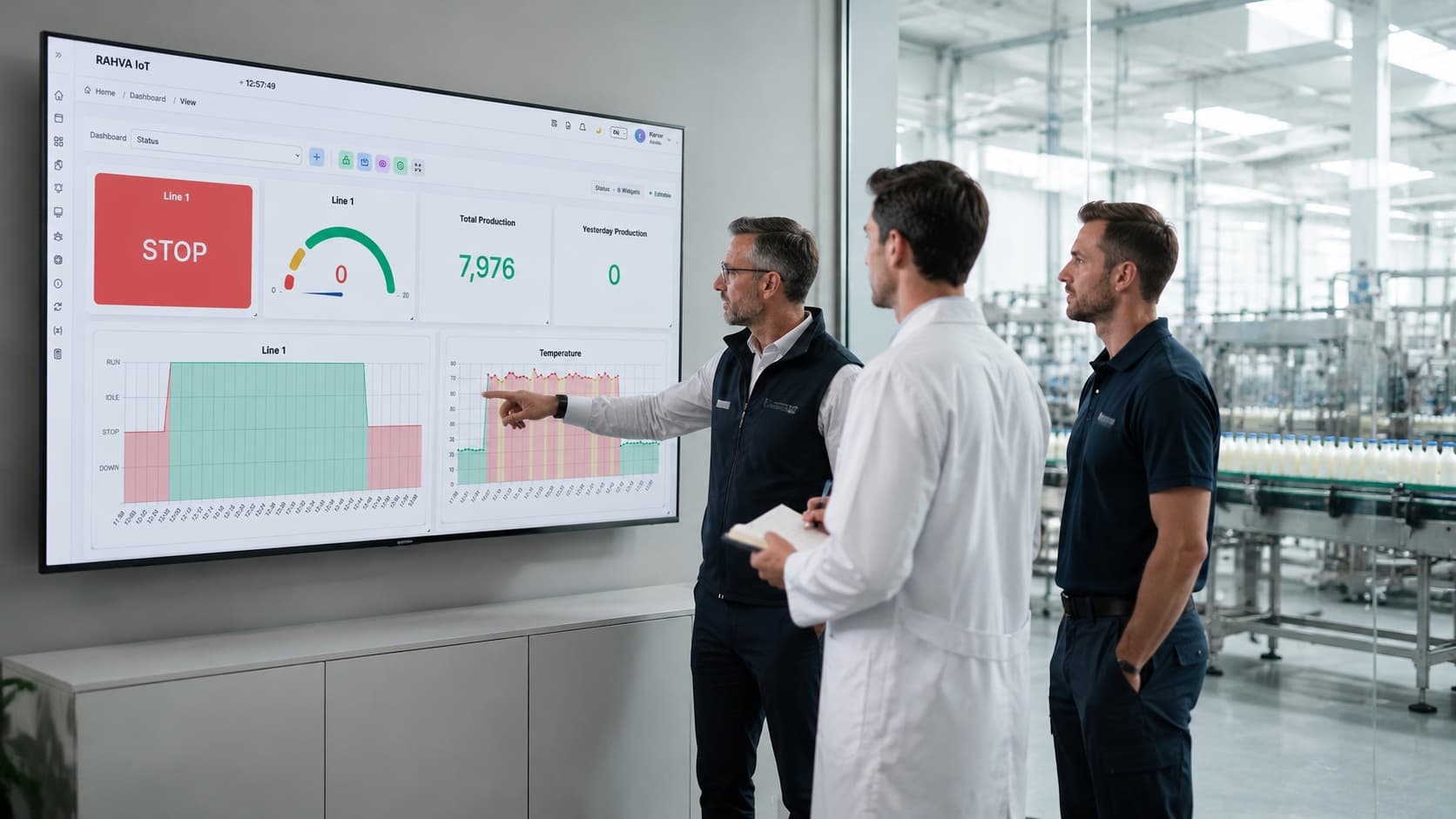
Each layer has a clear role
Sensor layer — the interface with the machine
Sensors are mounted on existing machines and equipment to detect physical signals of production activity — operating status, cycles, and stoppages.
- Installed on existing machines with no equipment modifications
- Measures status, activity, and production cycles
- Works with both old and new machines
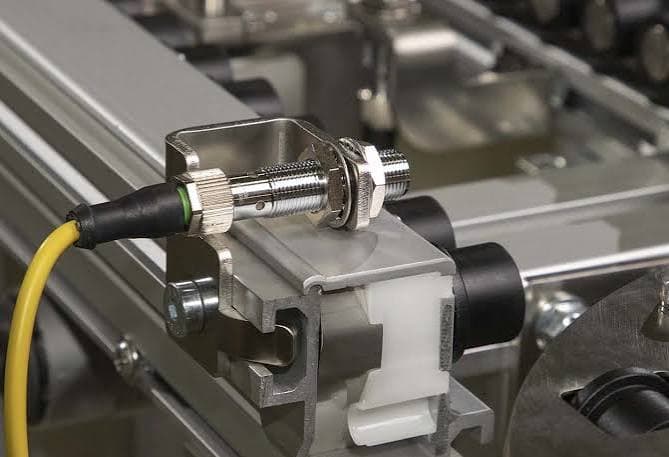 Sensor S-104 · Connected
Data acquisition layer — the physical-to-digital bridge
Data acquisition devices are placed alongside the line, read sensor data, and securely send it to the platform.
- Each device collects data from multiple sensors
- Secure transmission to the platform
- Deployed alongside the line without interfering with machine control
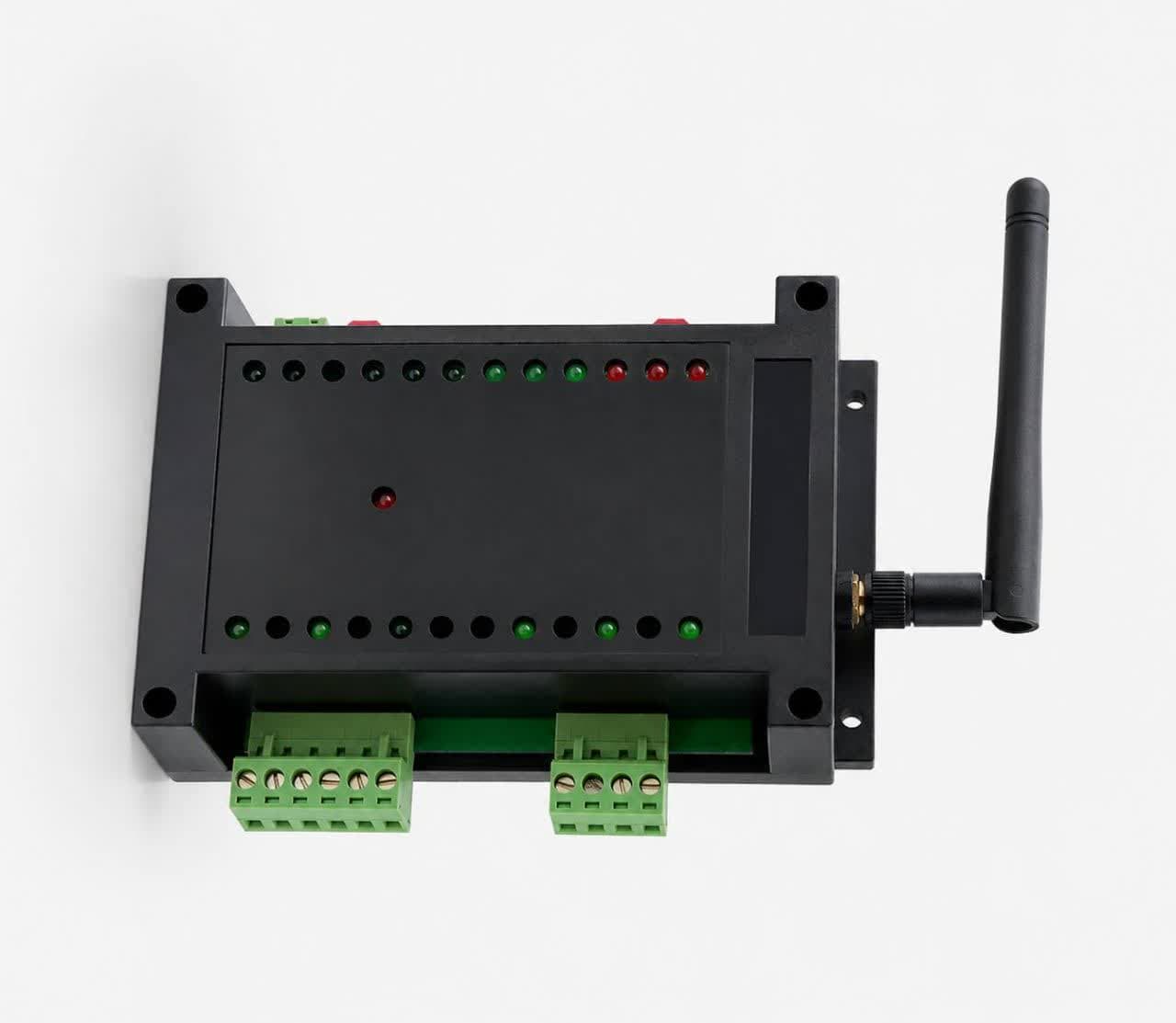 DAQ-04 · 8 channels · Online
Real-time monitoring — production status as it happens
The platform processes incoming data and displays machine status, production counts, and downtime in real time.
- Machine status: running / stopped
- Live production counts and rates
- Current downtime display
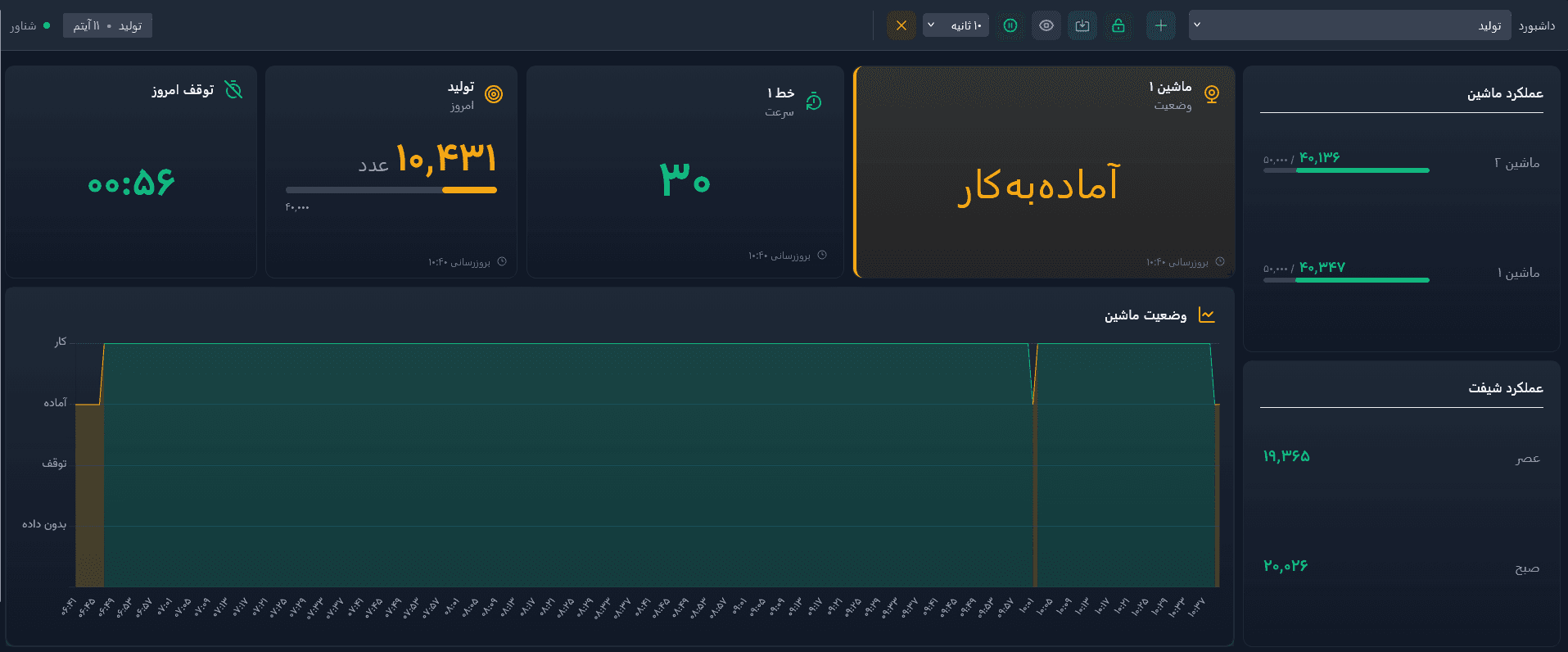 Line 2 · 7 of 8 machines active
Historical data and analysis — the memory of production
All data is stored so that production behavior can be examined over time — trends, downtime patterns, and comparisons across periods and shifts.
- Continuous production data storage
- Trend analysis and recurring pattern identification
- Comparison of machines, lines, and shifts
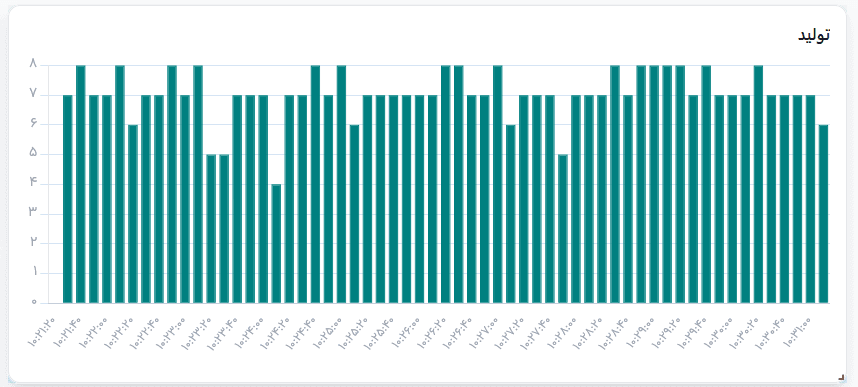 12-week production trend
Dashboards and reports — information for every role
Platform information is delivered through industrial dashboards and structured reports — with separate, clear views for operators, shift supervisors, and plant managers.
- Real-time dashboards for the floor and the office
- Structured production and performance reports
- Viewable on mobile, tablet, and shop-floor displays
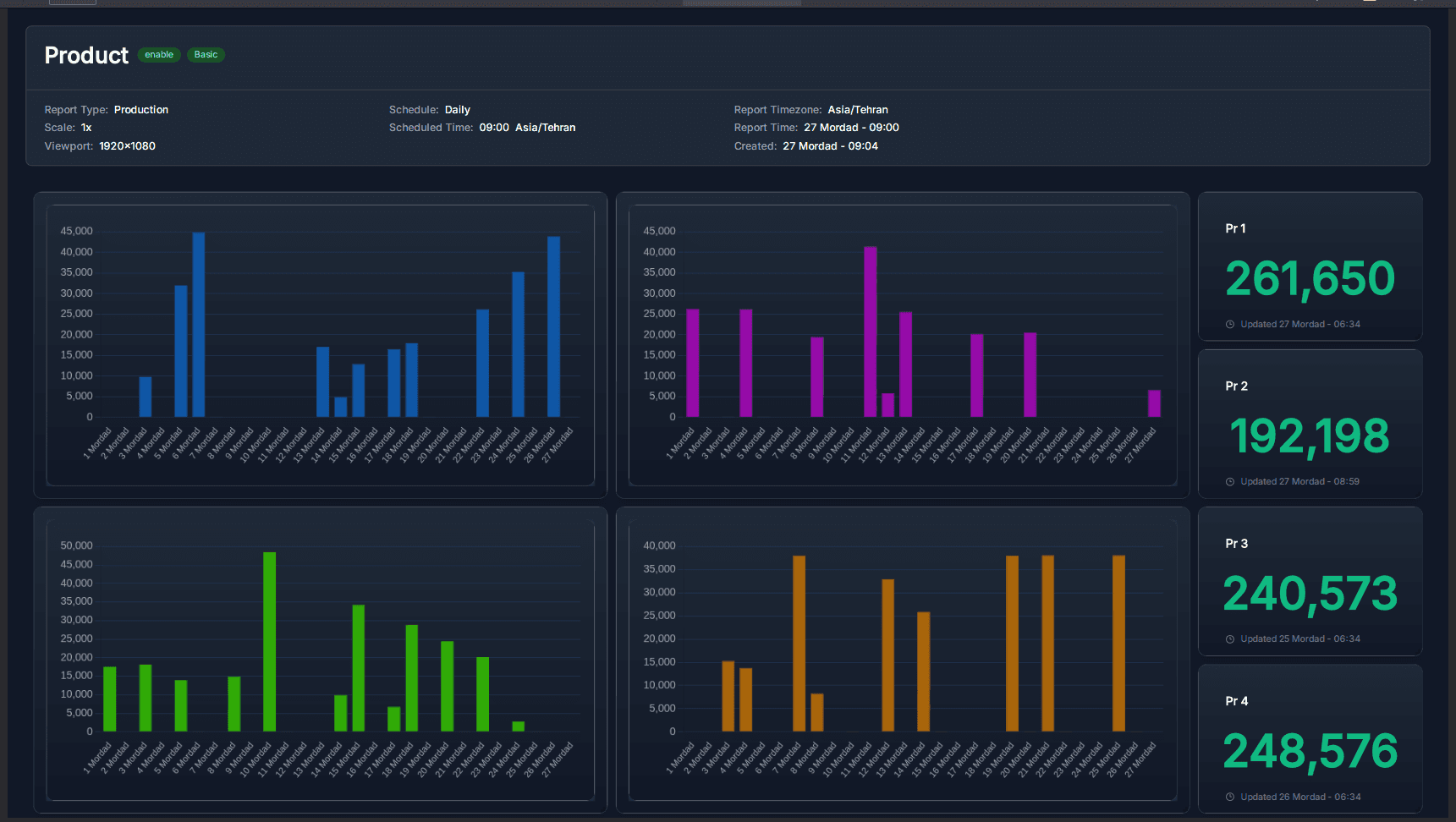 Shift report · Ready to present
Your data, your rules
Production data is an industrial asset. Our core principles regarding this asset are:
Data ownership
Collected data belongs to your factory and remains under your control.
Secure transmission
Acquisition devices communicate with the platform over secure channels.
Role-based access
Users only see what they need — from operators to management.
Deployment options
Deployment aligned with your organization's policies — from a small pilot to multi-line coverage.
From one machine to the entire factory
The platform layers are designed for gradual expansion — the same path you follow in the pilot extends to full factory scale.
Test the platform with your own equipment
The pilot can cover just one machine or one line.